By James Reber, Next Gen Stats Research Analyst
If you're a quarterback, pass-protector or play-caller, the NFL is loaded with edge rushers who can make your life harder. Offenses are terrified of pressure machines like Myles Garrett (who just broke the official all-time single-season sack record), T.J. Watt (who tied it in 2021), Will Anderson Jr., Aidan Hutchinson, Micah Parsons and others who regularly wreak havoc on pockets. Offenses need a method of protecting their QBs, buying them time to complete their progressions without sacrificing route-runners or the integrity of the offensive line.
Enter the chip block.
The concept of the chip block is not new in and of itself. The execution is very simple: A skill player, generally a tight end, will quickly engage (or "chip") the pass rusher to deter his path ever so slightly, then continue to run a route. And it's been a wildly successful tactic. From 2019 to 2025, edge rushers have generated pressure in an average of 3.43 seconds when dealing with a chip block, compared to just 2.84 seconds in one-on-one matchups. With more time to throw before defenders get home, quarterbacks gain more freedom to go deep, averaging 9.3 air yards on pass attempts with chips over that span compared to 7.2 otherwise -- an advantage that is nicely illustrated by Sam Darnold's 51-yard connection with Rashid Shaheed in the NFC title-game highlight above, which features a chip block by AJ Barner on Rams defender Jared Verse.
And here's where we get to the trend: No doubt enticed by the chance to gain nearly 0.6 extra seconds to run a play (a lifetime, in football terms), offenses around the league have adopted the strategy with increasing frequency. In 2023, teams employed chip blocks on over 20% of pass plays (21.3%) for the first time since Next Gen Stats began tracking them, in 2018. Then, the rate spiked to 23.9% in 2024 and leapt again to 26.8% this past season.

Star pass rushers cannot escape the new threat. Consider Hutchinson. The Detroit defender was chip-blocked on 127 pass rushes this season, the third-most in the NFL, for a chip-block rate of 22.2%. Compare that to his numbers from his first three pro seasons combined: Hutchinson was chip-blocked 142 times, for a chip-block rate of 11%. Meanwhile, in Houston, Anderson and Danielle Hunter became the first pair of teammates in the NGS tracking era who were both chipped at least 90 times in the same season. And in Pittsburgh, Watt was met with 149 chip blocks in 2024, the most any player has faced in a season since at least 2018, and followed it up with 134 in 2025. Watt recorded the two lowest pressure rates of his career in 2024 and 2025, and it's fair to wonder if the extra blocking attention was a factor.
Then there's Garrett, who is somehow not only adapting but thriving under the heat of the added challenge in Cleveland. The newly minted Defensive Player of the Year generated a baffling 23.0% pressure rate when chipped in 2025, compared to just 15.6% in one-on-one matchups. He recorded 29 pressures against chips, 10 more than any other player in a season since at least 2018, along with 5.5 of his 23 sacks.
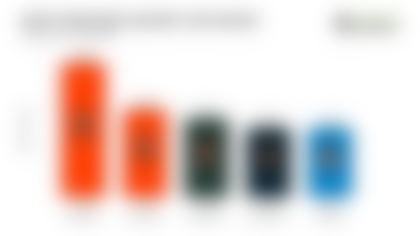
From 2018 to 2024, six teams set a chip on at least 30% of their pass plays -- a rate matched by nine different offenses this season alone. Which teams and coaches are leading the charge? As with many of the NFL's most enterprising innovations of the last decade, the Sean McVay-Kyle Shanahan coaching tree has delivered an outsized impact in the realm of chip blocks.
That duo's offensive hallmarks -- such as condensed formations, motion and heavy personnel -- have become ubiquitous in today's NFL, and all facilitate the use of chip blocks. Minnesota, helmed by McVay protégé Kevin O'Connell, has led the NFL in chip-block rate in three consecutive seasons. In 2023, the Vikings became the first team in the NGS tracking era to chip over 30% of the time on pass plays. In 2024, they became the first team to hit a rate of 35% or higher. In 2025, they extended the pattern by breaking the 40% barrier. The Browns -- led at the time by Kevin Stefanski, who became the Falcons' head coach this year -- have also finished in the top six in four consecutive seasons. Besides the Browns, every one of the eight offenses with the highest frequency of chip blocks employed McVay, Shanahan, or one of the duo's former offensive coordinators as their play-caller.
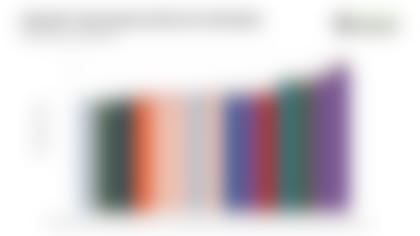
The trend has translated to individual blockers, as well. From 2018 to 2021, no single player set 100 or more chip blocks in a season. From 2022 to '24, one tight end per season managed the feat. And then, of course, in 2025, there was a complete upheaval, with eight different tight ends providing chip help at least 100 times, while T.J. Hockenson, Jake Ferguson, Kyle Pitts and Trey McBride became the first four players in the Next Gen Stats database to set at least 110 chips.
The advantage of chip blocks over true pass blocks is that the chip-blocking player can still run a route, and players were generally highly effective pass-catchers when coming out of a chip this season. On routes run out of a chip block, players caught an average of 80.2% of their targets; the overall average for running backs and tight ends was 74.7%. Hunter Henry caught every one of his 21 targets after delivering a chip block, while Hockenson gained nearly half of his receiving yards (210 of 438) off a chip.
The rise of the chip block coincides with the increased use of multiple tight ends. In 2025, teams used multiple TEs on 25.5% of pass plays, the highest rate Next Gen Stats has tracked (going back to 2016). They chipped on 29.2% of those plays while chipping on 25.1% of all others.
The newly crowned Seahawks contributed massively to the league's TE creativity. Correspondingly, they were the first team since at least 2018 to set multiple chip blocks on at least 10% of their pass plays. Their effective chipping continued through their title run; Darnold was pressured on only one of the 25 plays on which the Seahawks chipped in the playoffs, and he was kept clean on all eight dropbacks that featured chips in the Super Bowl.
Coaching evolution in the NFL is about creating small advantages that lead to big results, and the chip block fits the bill exquisitely. The split-second that a route-runner spends interrupting a dangerous pass rusher will very frequently make the difference between the QB having to throw the ball away and attempting a successful deep shot. It will be fascinating to monitor the defensive response to this phenomenon, but until that response develops, it's safe to assume the chip block will remain an integral aspect of the league's most forward-thinking offenses.